
Steel ai
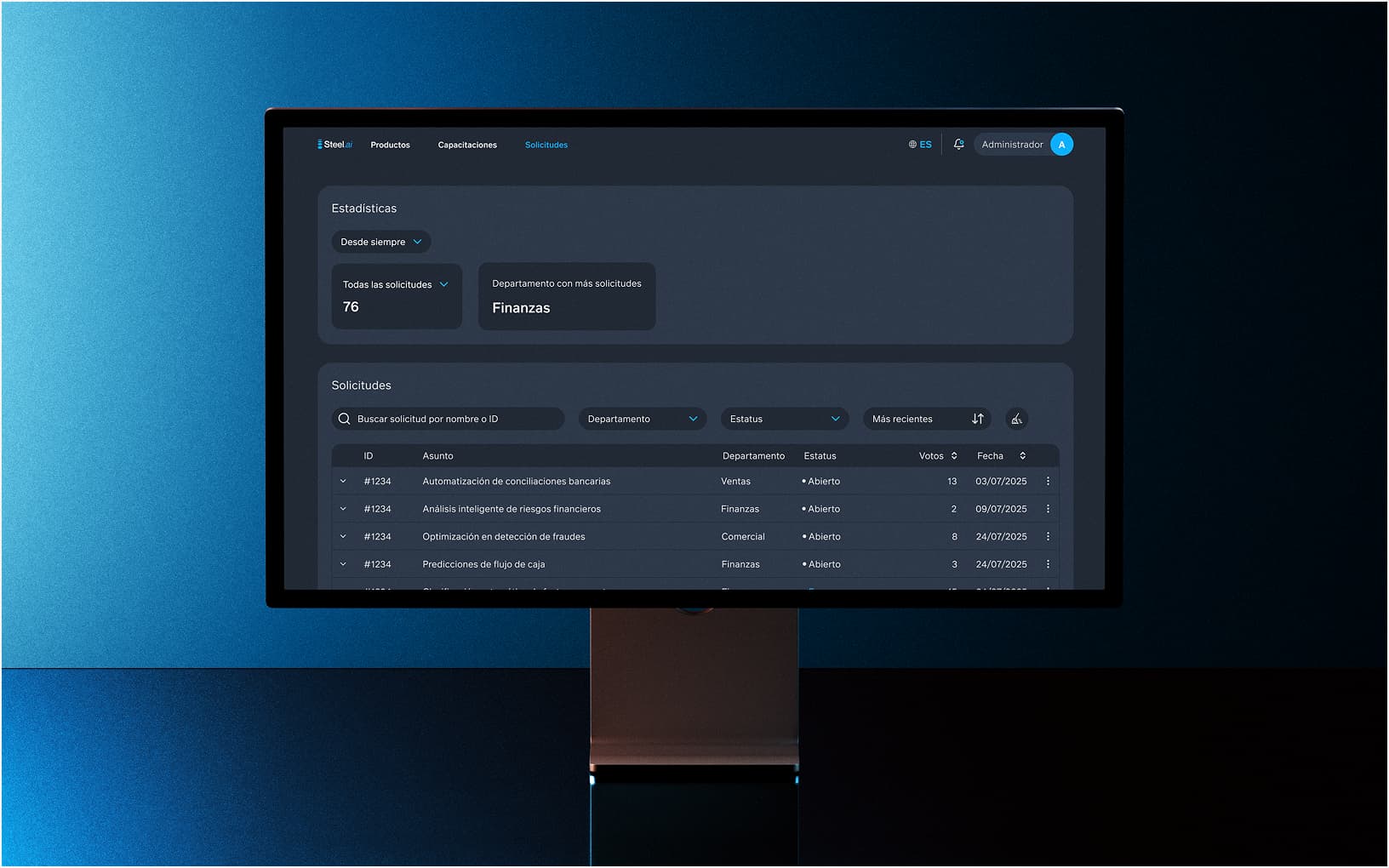
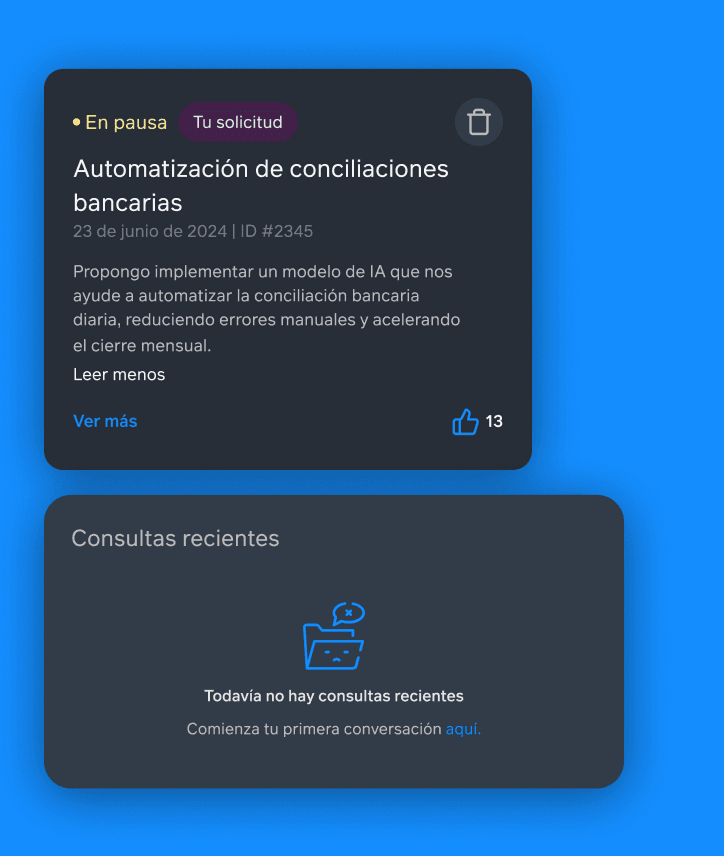
A 70-year-old leader in the steel industry (referred to as "Steel.ai" under NDA) had hit a wall in its AI adoption. Its core AI software, "Calculating," was meant to improve materials estimation, but it wasn't being adopted internally. At the same time, the organization had no unified system for training its team, tracking platform usage, or managing its innovation initiatives.
Visual identity
Web design
Graphic design
Selected project from my time at Acueducto
Role
Product design
Client
Steel.ai
Date
August 2025
The problem
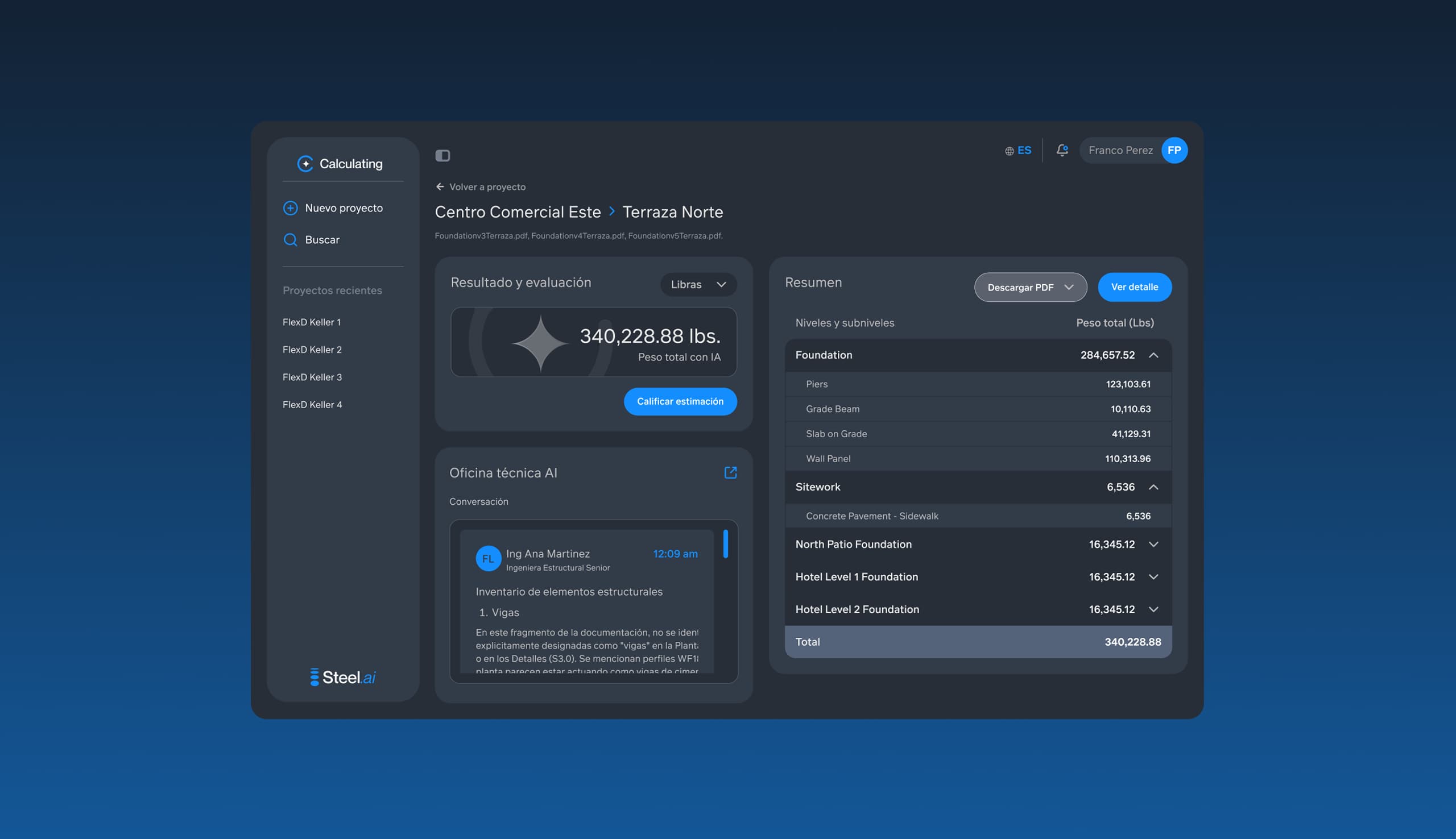
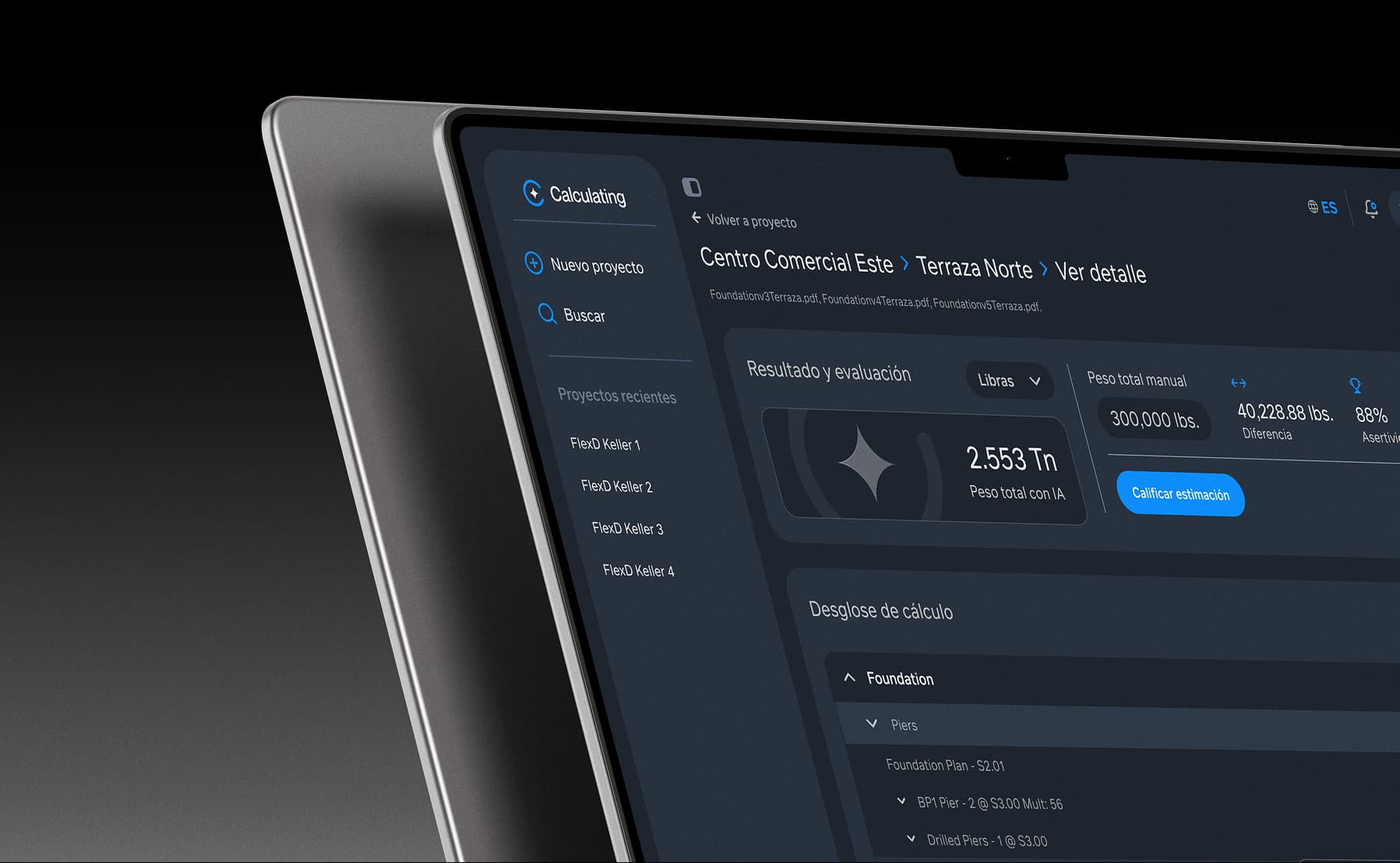
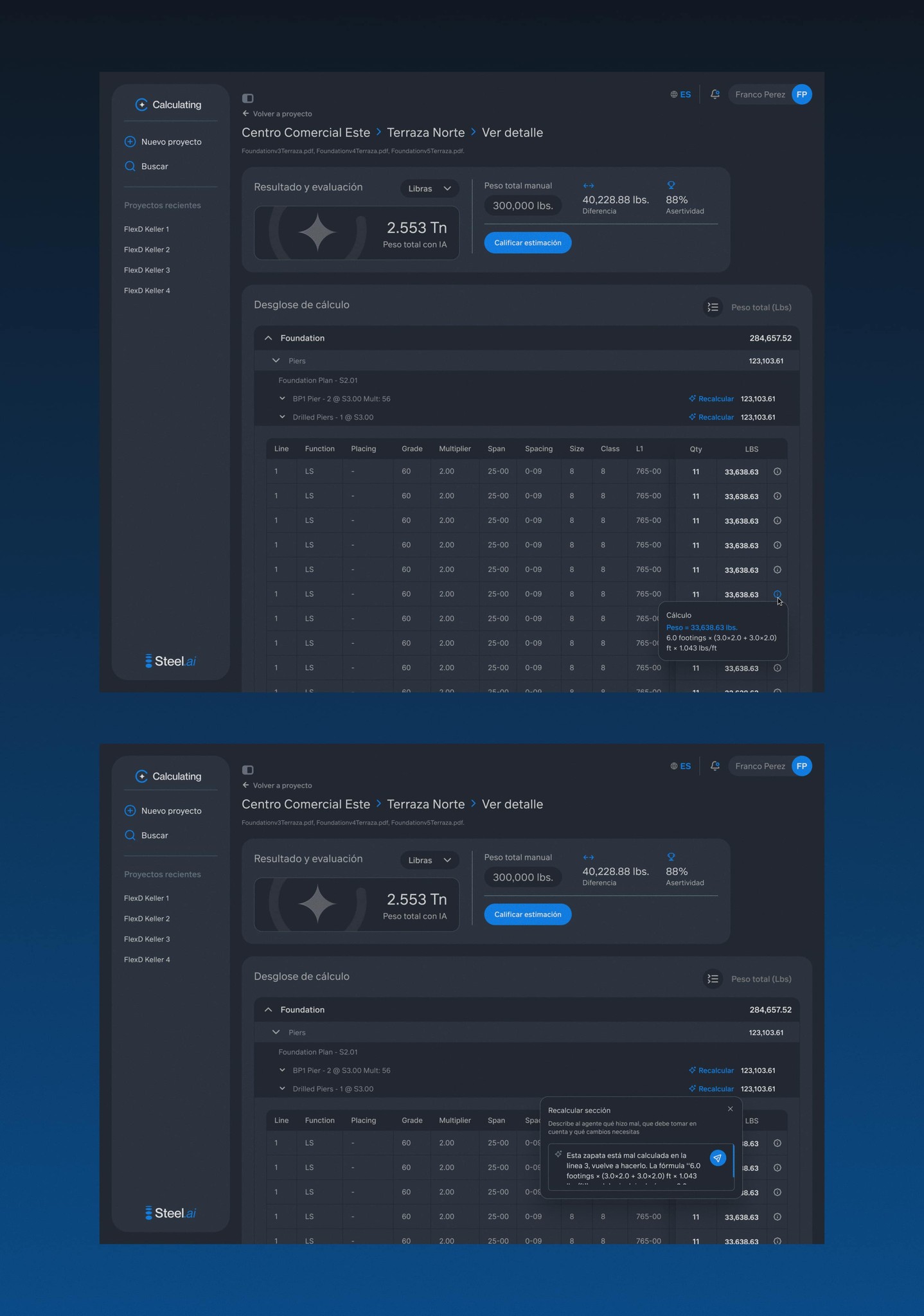
The organization was mature enough to scale its AI capabilities, but it ran into a critical obstacle. Its core software, "Calculating" (an alias, for confidentiality), was meant to improve materials estimation, yet it wasn't gaining internal adoption. When users tried to audit the algorithm's calculations, the interface returned massive, unstructured blocks of code — making the numbers impossible to validate and eroding trust in the system. In parallel, the company had no integrated system for training its team, monitoring app usage, or centralizing its innovation initiatives.
The challenge
The challenge came in two parts, across different phases of the project. First, a tight one-week sprint to fully redesign the "Calculating" tool, with the goal of closing the trust gap between the engineers and the AI.
The solution
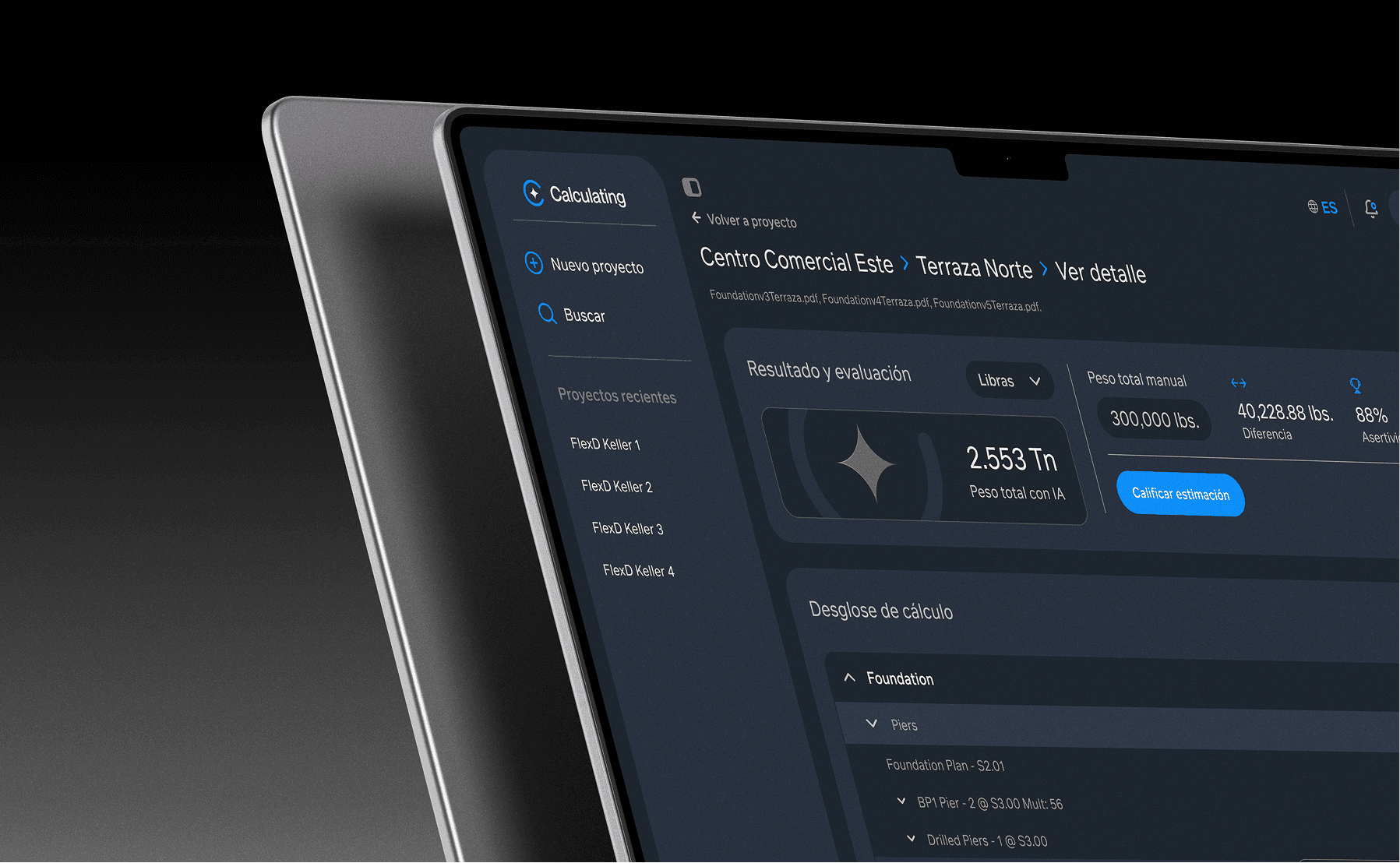
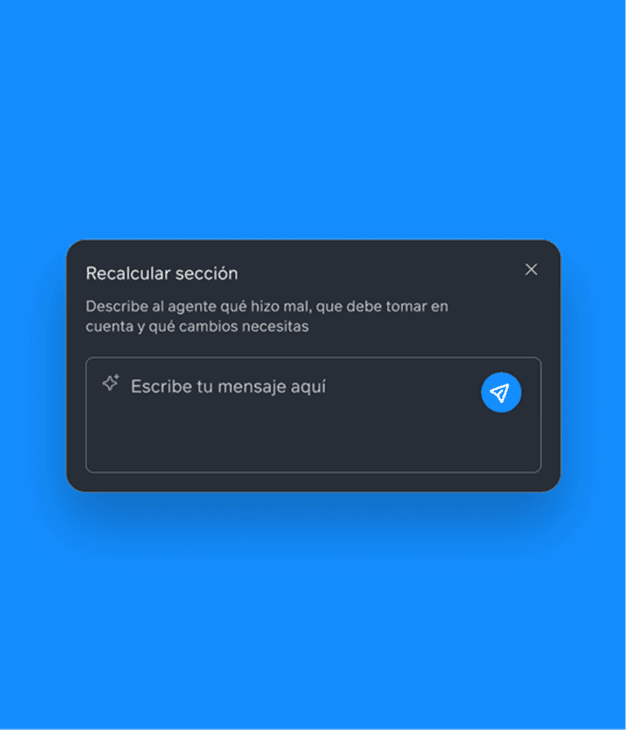
To meet the one-week deadline for "Calculating," I spent a full day interviewing a specialist engineer to understand exactly how they evaluate an estimate. I designed a new interface that displays the data the way their legacy software does, so they can check steel quantities against a familiar format and correct errors in the tables on the spot through an AI text prompt.
We tested the prototype with the engineering team; they were able to validate estimates without leaving the interface, turning a frustrating bottleneck into a fast, reliable workflow.
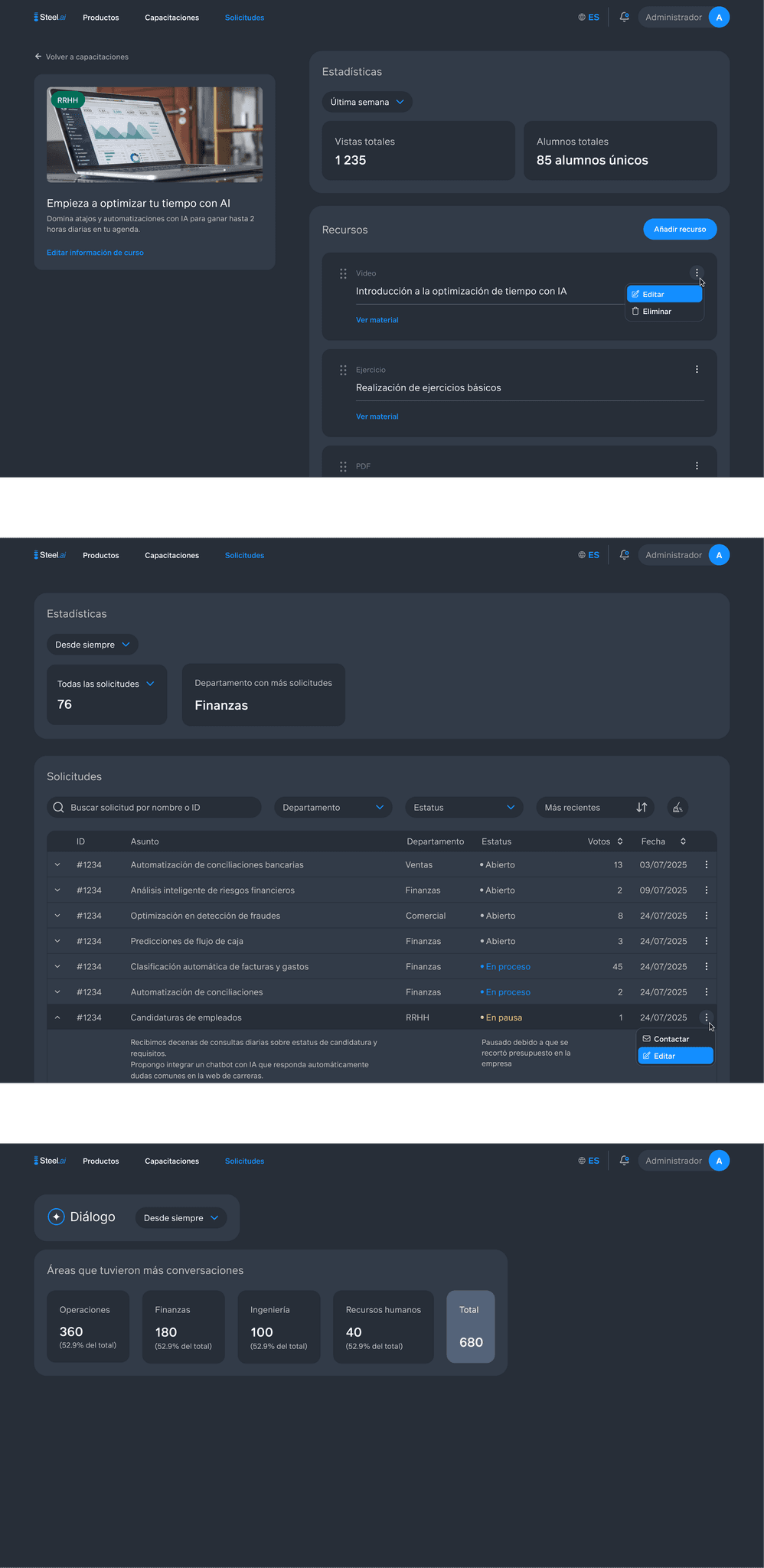
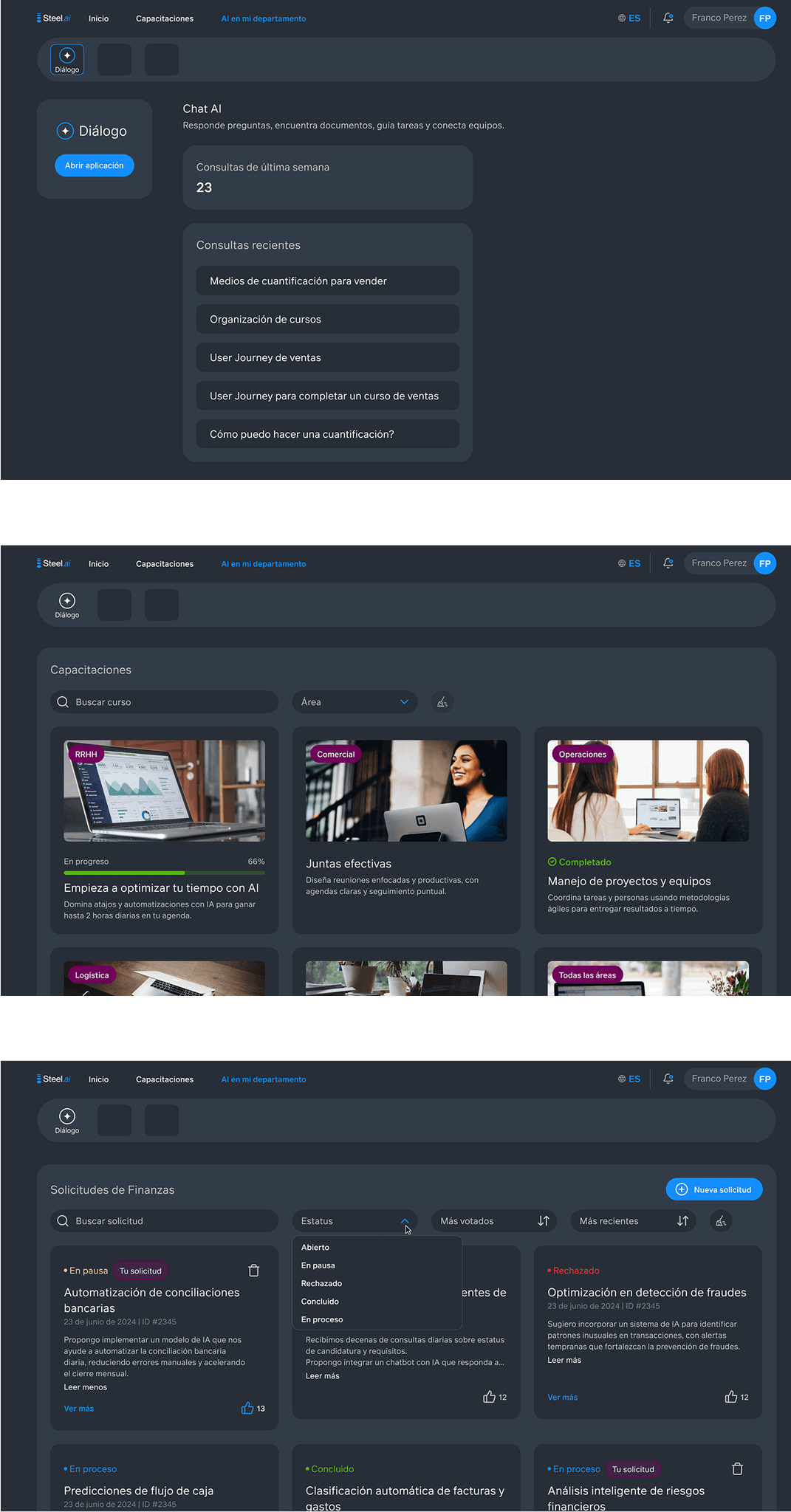
To keep implementation consistent across these constantly evolving web platforms, I defined the tokens and components, which the engineering team implemented in shadcn/ui.